Reinsurers ended 2025 with record capital, yet Moody's says more than half of natural catastrophe losses that year were not insured. Commonwealth leaders are now weighing a sovereign-owned mutual to pool disaster risk, and companies should check how much of their own exposure they assume someone else will carry.
Key Takeaways
The insurance industry has never had more money to absorb disasters, and it is still covering less than half of what disasters cost. That gap is no longer an abstract statistic for development economists. It is pushing governments to build their own insurance, and it sits quietly inside the continuity plans of companies that assume a policy, a reinsurer or a public relief program will pick up the bill when the next storm hits. As COP31 negotiators in Antalya argue over who pays for adaptation, the more immediate question for business is how much of its own physical risk is actually covered.
In a September analysis reported by Reinsurance News, Moody's estimated that more than 50 percent of natural catastrophe losses were uninsured in 2025, and that 57.8 percent have gone uninsured since 2015. The gap varies sharply by peril. Moody's puts it at 83 percent for floods, 49 percent for hurricanes, 48 percent for severe convective storms and 27 percent for wildfires, while about 84 percent of US earthquake exposure carries no insurance at all. The ratings agency was blunt about why the industry cannot simply write its way out: insurers must hold enough capital to satisfy regulators and earn a return, and "these constraints limit how much catastrophe risk they can safely insure."
The shortfall is not for lack of money. As Insurance Business reported, Aon estimates global reinsurer capital reached $785 billion at the end of 2025, up almost 10 percent in a year, and catastrophe bond issuance hit a record $24.9 billion in the 12 months to June 30, 2026. Yet Swiss Re puts the global natural catastrophe protection gap at $424 billion in 2025, up from $395 billion a year earlier, with only about 49 percent of the year's economic losses covered. Moody's modeling of a one-in-200-year US catastrophe year suggests more than $400 billion of insured losses against more than $1.1 trillion in total damage to insurable property, leaving a gap of roughly $700 billion. Insurance covered less than half of global catastrophe losses in every year from 2015 through 2025.
Where private cover will not stretch, governments are starting to pool risk among themselves. On November 2, the Sustainable Markets Initiative presented a feasibility study to 42 Commonwealth heads of government in Antigua and Barbuda proposing "Commonwealth Mutual," a sovereign-owned mutual (re)insurance vehicle for extreme weather. It would share risk across member states, pay out quickly when disaster strikes, use collective purchasing power to buy reinsurance on better terms, and pre-fund disaster financing so that governments rely less on emergency loans after the fact. It is designed to sit alongside existing regional pools such as the Caribbean Catastrophe Risk Insurance Facility, African Risk Capacity and the Pacific Catastrophe Risk Insurance Company, not replace them. Jennifer Jordan-Saifi, the initiative's president, called it "a rare opportunity to turn shared climate risk into collective strength."
The next step is a fully costed business plan, so nothing is insured yet. But the direction matters. Pooled, pre-funded cover is a response to the same arithmetic Moody's describes, and it arrives as public money for adaptation remains short. Ahead of the Antalya talks, which run from November 9 to 20, Climate Home News noted that last year's pledge to at least triple adaptation finance by 2035 came with no baseline year, and that a UN report found even a tripling would meet only about a third of developing countries' needs.
For companies, the protection gap is not someone else's problem. Every uninsured loss is paid by someone, and for a damaged plant, a flooded warehouse or a supplier that cannot ship, that someone is often the business. MSCI estimates that roughly 9,350 listed companies face a combined $1.3 trillion in asset damage and lost revenue from physical climate hazards over a year. Most of that, about 86 percent, comes from chronic hazards, led by extreme heat at $598 billion, which are exactly the slow, cumulative losses that property policies rarely cover. Even for mega-cap companies, more than 30 percent of estimated losses on average come from a single province.
Disclosure has not caught up with the exposure. MSCI found that 65 percent of MSCI ACWI Index constituents had disclosed completed physical risk assessments, but only 56 percent reported building climate factors into overall risk management. An assessment that sits in a sustainability report while the treasury team assumes full insurance recovery is not a risk plan. And as public budgets absorb more uninsured losses, the roads, utilities and services companies rely on are likely to be repaired more slowly, adding to the share of disaster cost that never shows up on a claim form.
For sustainability, risk and finance leaders, the practical steps look like this:
Commonwealth Mutual may take years to launch, and it may never cover a single company directly. But the logic behind it applies to every balance sheet: when the market cannot insure more than half of disaster losses, the uninsured share has to be planned for by whoever ends up holding it. Companies that have not measured their own share are holding it anyway.


Report
When insurance will not cover most of a disaster's cost, resilience spending has to earn its place before the storm. This report sets out the ROI data and frameworks for building that business case.
Download

Report
Uninsured disaster losses land on public budgets that are already stretched. This report looks at how public sector organizations are turning that budget pressure into service redesign that holds up for their communities.
Download

Guide
California's climate rules ask large companies to describe their climate-related financial risk, physical hazards included. This starter kit maps the obligations and a 90-day plan for building a credible response.
Download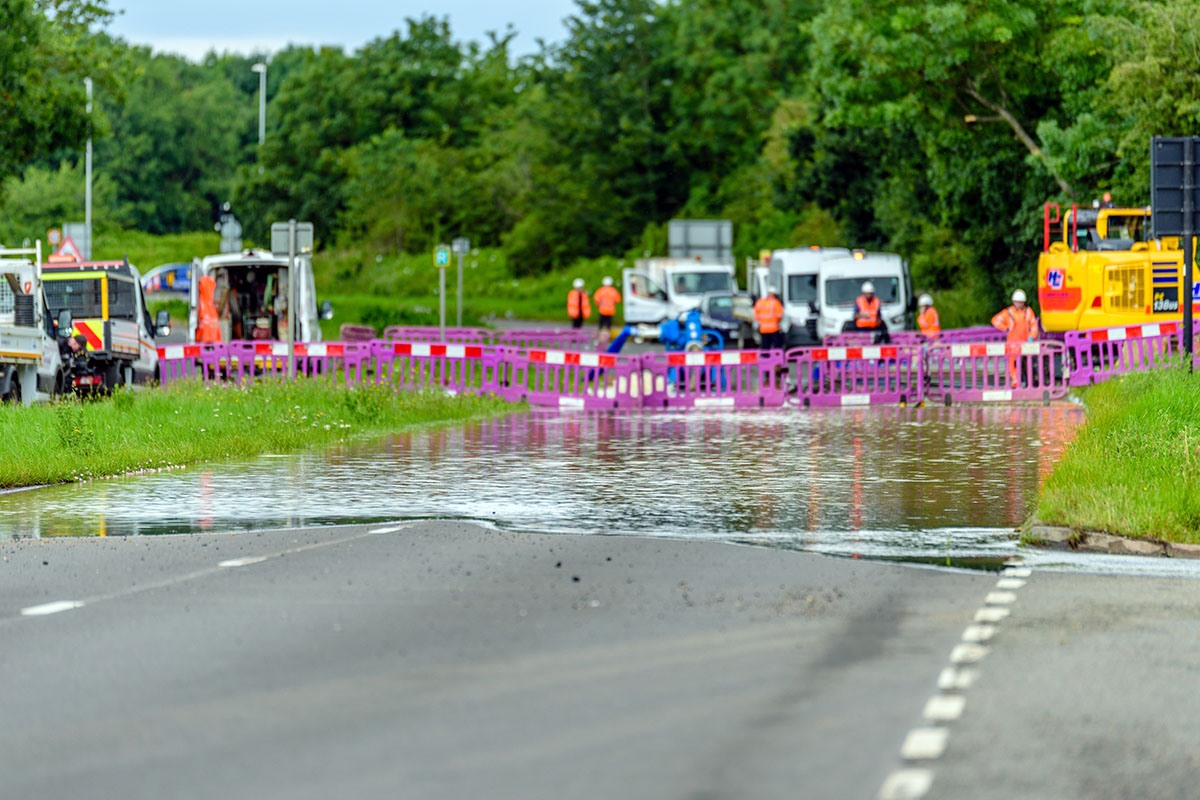
Illinois is appealing a FEMA denial as the agency tells states to hold their own reserves and weighs cutting its share of public repair costs to 50 percent. The roads and sewers companies depend on will be rebuilt on local budgets and local timelines.
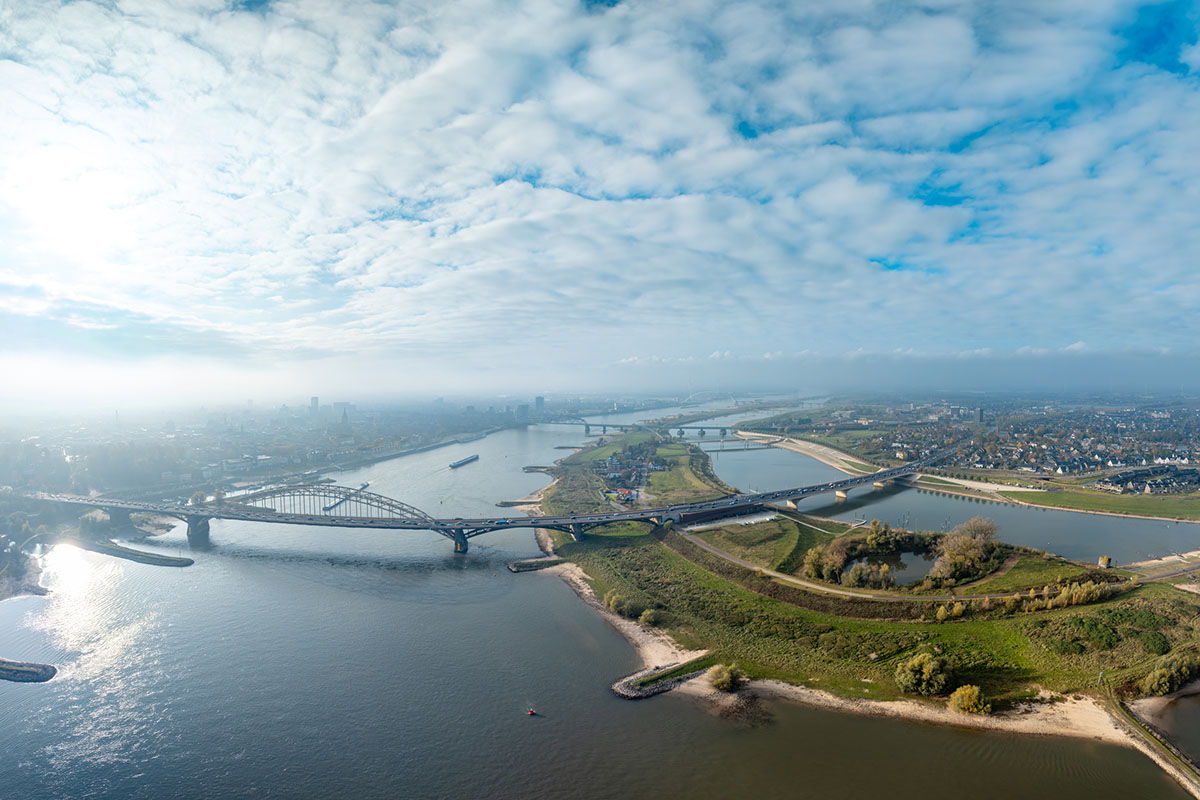
FEMA resilience grants dropped from $3.3 billion in 2022 to $726 million in 2025. The bill for flood and storm defenses is moving to states, cities and the businesses that depend on them.
