Florida and Nebraska are suing First Street over property-level climate risk scores. The cases test how risk models are sold and explained, but the flood and heat exposure they try to measure does not depend on the verdict.
Key Takeaways
Climate risk data has moved from the sustainability report to the courtroom. Two state attorneys general now argue that a widely used property risk score misleads homeowners and drags down home values. Whatever the courts decide, the companies, insurers and public agencies that rely on physical risk models face a harder question: if one model can be sued for being alarming, how should anyone show the uncertainty in the numbers they use?
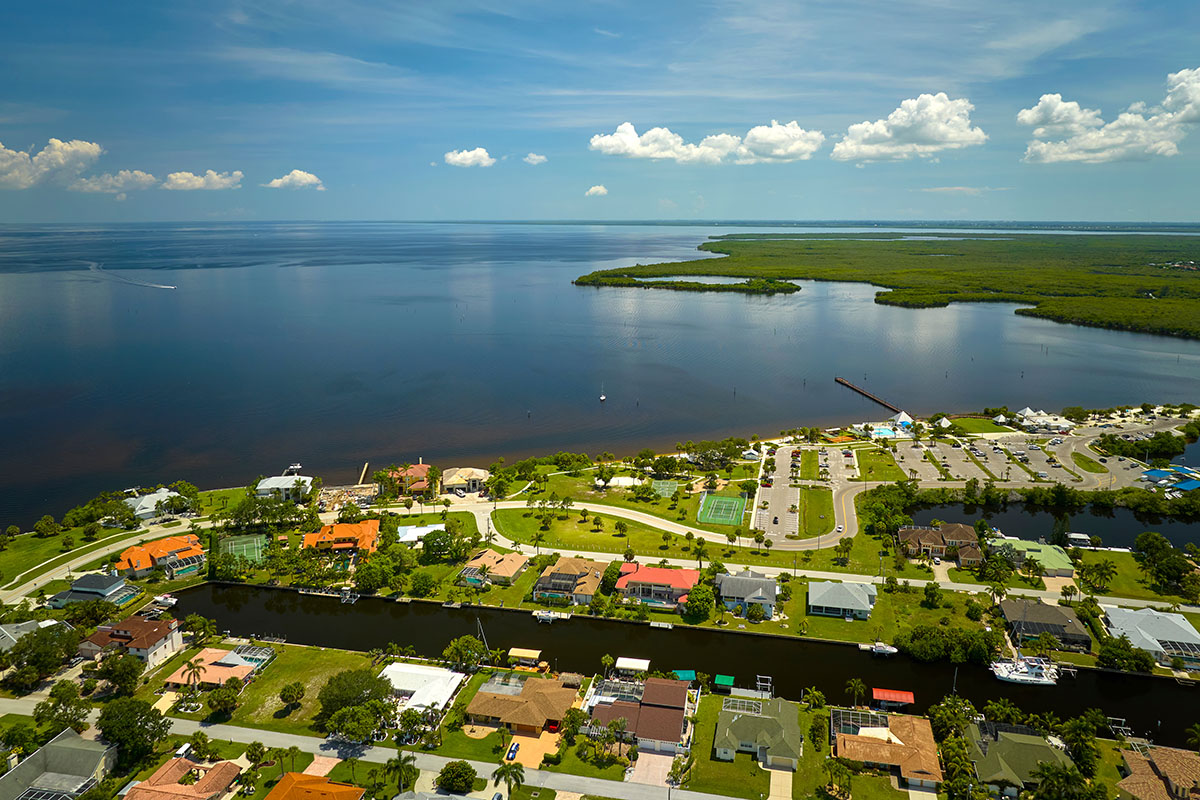
Florida Attorney General James Uthmeier sued First Street Technology in state court on October 23, ESG Dive reports, alleging violations of the Florida Deceptive and Unfair Trade Practices Act. The suit targets First Street's Risk Factor product, which rates flood, fire, air quality and heat risk for individual properties, and seeks $10,000 per violation, or $15,000 per violation involving a senior citizen. First Street's position, cited in the complaint, is that FEMA projects risk at the community level while its own model works property by property.
The central example is a mismatch with federal maps. "First Street rates certain properties as major flood risk, but FEMA rates the same properties as minimal flood hazard," Uthmeier said, according to HousingWire. The complaint also says homeowners have no path to correct a disputed score, because First Street generally does not change scores based on individual disputes. The state wants a jury trial, a permanent injunction, consumer redress and disgorgement.
Florida is not alone. Nebraska Attorney General Mike Hilgers filed a similar suit in August, alleging the scores rely on incomplete property data, ignore flood protection homeowners have paid for, and do not disclose that the predictions may differ from federal data or other climate models. First Street did not respond to requests for comment in the coverage we reviewed.
The fight is not about a niche consumer widget. First Street's 1-to-10 scores sit on Zillow, Redfin and Realtor.com, and Insurance Journal, carrying Bloomberg's reporting, notes that insurers also use the data and that Connecticut's state insurance department partnered with First Street to offer residents free property assessments. Zillow stopped displaying the scores directly on listings last year after objections from the California Regional Multiple Listing Service, while Redfin has defended keeping them.
The data now sits inside one of the largest ESG data providers. MSCI completed its acquisition of First Street in August, describing physics-based climate risk analytics covering more than 2.4 billion structures worldwide, which it is folding into its existing climate tools so clients can build changing exposures into financial decisions. ESG Dive puts the deal value at $120 million.
Model disagreement is real, and it is not new. In 2024, Bloomberg compared First Street's granular Los Angeles flood estimates with an academic team's, and the two overlapped just a quarter of the time. Boston University law professor Madison Condon told Bloomberg she has concerns about First Street's marketing, but warned of "real concerns that a lawsuit of this type could chill the provision of physical climate-risk data," adding that "scientific models can disagree without being willfully deceptive."
For companies, the lawsuits land while climate risk disclosure keeps spreading. California's SB 261 requires covered companies to publish climate-related financial risk reports, though the Ninth Circuit barred enforcement pending appeal in November 2025 and, as Cleary Gottlieb noted, CARB said it would not penalize companies that wait for the appeal to be resolved. The same lawyers advised companies to stay ready in case the law is upheld.
Elsewhere the direction is clear. Thailand announced mandatory ISSB-aligned reporting on November 3, starting with its 50 largest listed companies in 2028, and more than 45 jurisdictions have begun adopting the standards. Those frameworks ask companies to assess physical risk to their assets, and most will lean on third-party models to do it. A score that a court calls misleading is a weak foundation for a disclosure; a score with no stated uncertainty is a weak foundation too.
The practical lesson from Florida and Nebraska is not to stop using physical risk data. It is to treat any single score as one estimate, show how it was built, and be ready to explain where it disagrees with official maps. Organizations handling this well are working through a short list:
The lawsuits may change how climate risk scores are marketed and labeled. They will not change how much water a storm surge pushes into a canal. Companies that can show their working will be in a stronger position than those that either trust a single number or stop looking altogether.


Guide
However a court rates the scores, the floods and heat they model still arrive. This guide covers the communications and response protocols that keep sites running when they do.
Download

Guide
SB 261's climate risk report is paused, not repealed. This starter kit helps companies doing business in California get ready for both state climate laws with a 90-day action plan.
Download

Scorecard
States are now both suing over climate risk data and using it, as Connecticut does. Public finance teams can use this self-assessment to benchmark their own resilience and set investment priorities.
Download
An EcoVadis and Kearney analysis of 56,000 companies finds just 4 percent use primary supplier data for Scope 3. The fix starts in the purchase contract.

Remote sensing technology is giving investors and supply chain teams unprecedented visibility into deforestation, methane leaks, and land use change in real time.
