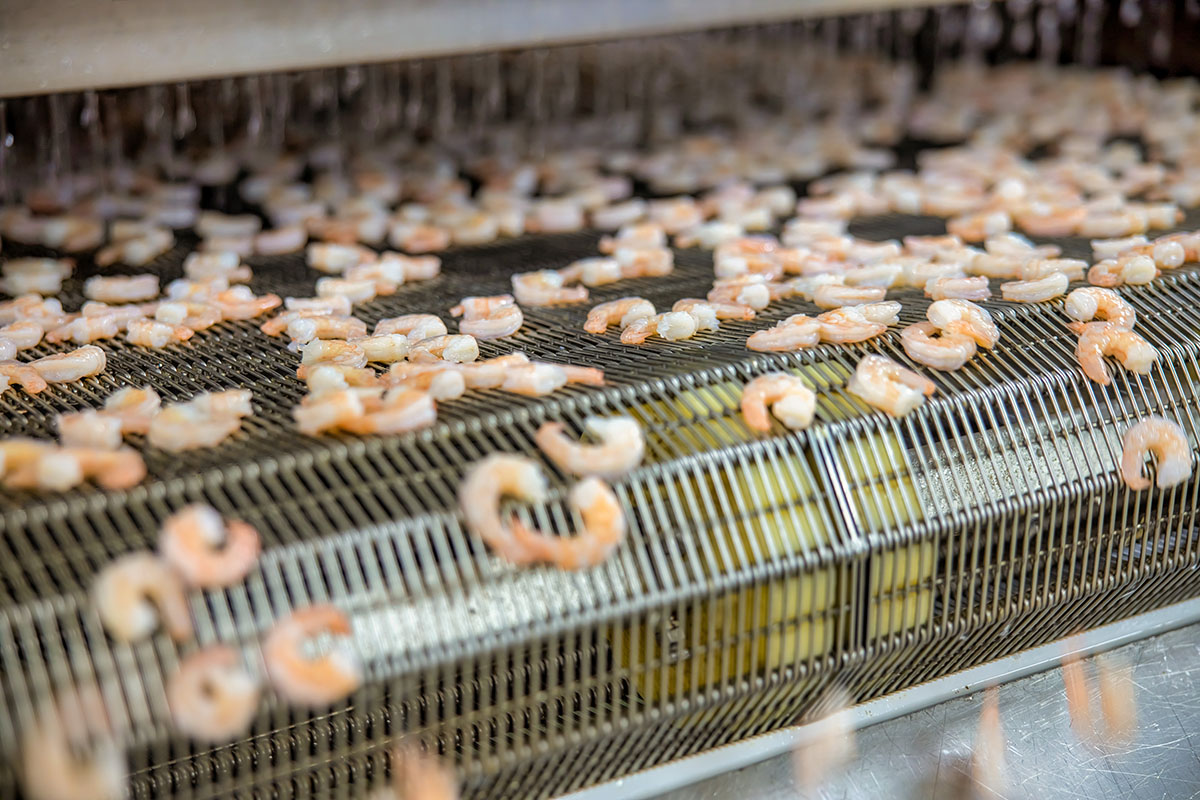
A Section 337 complaint filed October 28 asks the International Trade Commission to bar shrimp allegedly made with forced labor at an Indian processor. It names three U.S. grocery chains as respondents, and it shows that competitors, not only customs officers, can now start a forced labor case.
Key Takeaways
Forced labor enforcement at the U.S. border has mostly been something that happens to importers: Customs and Border Protection detains a shipment, and the company scrambles for paperwork. A complaint filed last week changes who gets to start the process. Two U.S. shrimpers have asked the International Trade Commission to block shrimp they say is made with forced labor, and they have named the grocery chains that sell it as respondents. If the Commission takes the case, a competitor will have opened a forced labor proceeding that runs straight through the retailer's supplier list.
According to Corporate Accountability Lab, which represents the complainants alongside Picard, Kentz & Rowe, Versaggi Shrimp Corp. and W & W Dock filed under Section 337 of the Tariff Act of 1930 on October 28. The proposed respondents are Nekkanti Sea Foods, a producer and processor in Andhra Pradesh; Eastern Fish, a wholesaler; and ALDI, Meijer and Ahold Delhaize, the U.S. chains the complaint says sell the shrimp. The relief sought is an exclusion order barring all shrimp produced by Nekkanti with forced labor from entering the United States.
The complaint describes a largely female workforce, many of them migrants from Odisha and members of Dalit or Adivasi communities, living in guarded company hostels with restricted movement, in some cases one outing a month. It alleges wages below Andhra Pradesh's minimum, unpaid overtime, pay routed through contractors who take a cut, missing employment contracts and debt from recruitment fees. These are allegations, and none has been tested before the Commission. The complaint maps them to ILO forced labor indicators including restriction of movement, withholding of wages and debt bondage, and it builds on CAL's 2024 Hidden Harvest report and reporting by the Associated Press, CNN and the Outlaw Ocean Project.
The commercial motive is explicit. "We can't compete with foreign... sweatshop-type labor," Justin Versaggi of Versaggi Shrimp says in CAL's account. Nekkanti produces more than 32,000 metric tons of shrimp a year, most of it bound for the United States, the complainants say. Once the complaint is noticed in the Federal Register, an eight-day public comment period opens, and the Commissioners then have 30 days to decide whether to institute an investigation.
Section 337 is best known for patent disputes. It bars unfair acts in the importation of goods that harm a U.S. industry, and the complainants argue that importing goods made with forced labor, which Section 307 of the Tariff Act already prohibits, is such an act. They cite earlier cases in which the Commission accepted violations of other federal laws as the basis for a Section 337 claim. They also argue the route offers a fuller process than the usual one, a Withhold Release Order from CBP, and that no single agency holds exclusive jurisdiction over forced labor claims.
For buyers, three things are different. The case is brought by a rival with a direct financial interest in pursuing it. Retailers are named parties rather than downstream bystanders. And Section 337 proceedings can produce cease and desist orders against downstream sellers as well as exclusion orders at the border, although CAL's summary does not say whether those have been requested here. A grocer that relied on a supplier's assurances would be answering in an adversarial proceeding, not a customs inquiry.
The case lands while the customs route is also widening. DHS added 43 companies to the Uyghur Forced Labor Prevention Act Entity List effective August 3, bringing it to 187 entities in the largest single expansion since the law took effect, according to a client alert from law firm Troutman, which says CBP has denied entry to more than 24,300 shipments valued at nearly $1 billion under the UFLPA. On October 2, the Office of the U.S. Trade Representative welcomed a joint statement by the U.S., Mexican and Argentine trade ministers on eliminating forced labor from global supply chains, with Ambassador Jamieson Greer calling on all countries "to ramp up efforts." And on October 8, Canada released consultation reports backing a listed-goods import regime under Bill C-35 that would make importers prove, on request, that their goods are not linked to forced labour.
The sector being asked to answer is not well prepared. KnowTheChain's latest benchmark of 45 of the largest food and beverage companies, reported by ESG Dive, found an average score of 15 out of 100, lower than three years earlier. Supermarkets led the sectors at 24, but nearly half of all companies scored below 10. Only one in five disclosed engaging directly with affected workers or their representatives, freedom of association averaged 6 and access to remedy averaged 5.
Those weak scores sit exactly where the Nekkanti allegations point. Contractor-paid wages, recruitment debt and hostel curfews are the conditions a scheduled social audit is least likely to surface, and the ones worker voice and remedy mechanisms exist to catch. A retailer that cannot show its own evidence of how it tested those risks will be relying on the supplier's word in a forum where the other side is motivated to challenge it.

Report
Contractor pay, recruitment debt and hostel curfews are the harms a scheduled audit tends to miss. Sedex's report covers how buyers move from audit-based supplier checks to continuous, data-driven monitoring.
Download

Report
An exclusion order is an import exposure that has to be traced through supplier agreements fast. Icertis's report shows how enterprises find that exposure and enforce protective clauses before costs land on the bottom line.
Download

Report
Losing a major supplier to a detention or exclusion order is an operational disruption, not only a compliance finding. Motorola Solutions sets out the measurable value of avoiding and recovering from disruptions like that.
Download
Canada's October 8 consultation reports back Bill C-35, which would make importers of listed goods prove they are free of forced labour. Businesses warn the evidence they need sits with suppliers they cannot see or compel.
AWS pledged more than $1 billion over five years to data center host communities and will stop signing NDAs with government agencies. More than 100 local moratoriums and $130 billion in blocked or delayed projects explain why.
